Ferrari Paint Correction in Manchester
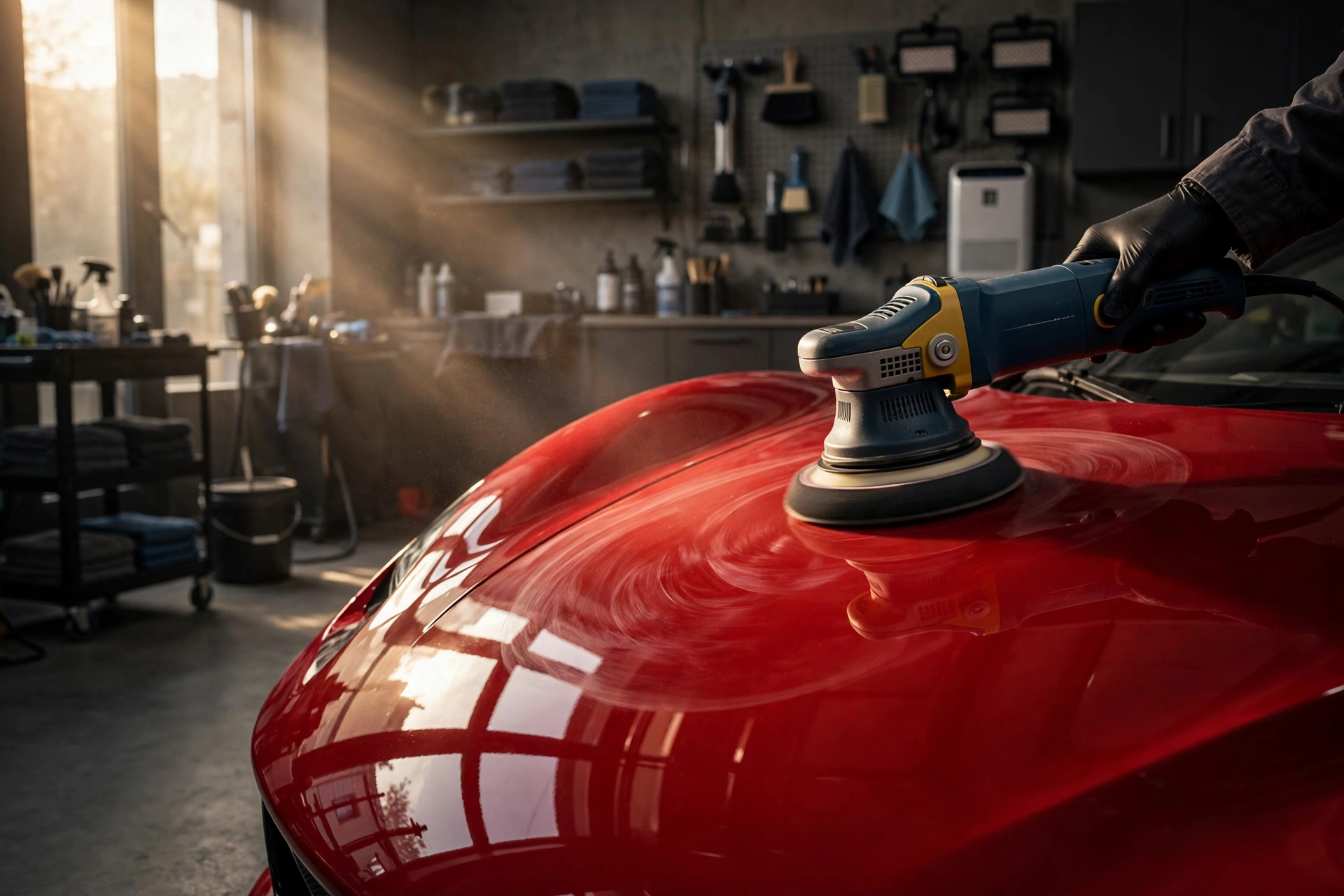
Paint correction is machine polishing that permanently removes swirls, haze, light scratches and oxidation from your Ferrari’s clear coat — not a filler or glaze that washes off. On thin, soft Ferrari paint it demands paint-depth measurement, test spots and restrained technique. Done properly, it restores deep, mirror-like reflections and is the essential foundation for any ceramic coating.
Key facts
- What it removes
- Swirls, haze, light scratches, oxidation and water-spot etching within the clear coat — permanently.
- The Ferrari rule
- Paint-depth readings and test spots before any machine work — thin Maranello clear coat leaves no margin for error.
- Typical cost bands
- £250–£450 single-stage, £450–£800 two-stage, £800–£1,500+ multi-stage/concours (UK market guides).
- Correction before coating
- A ceramic coating locks in whatever is underneath — correction first means it locks in perfection.
Swirls, haze, buffer trails and spider-webbing are not ‘patina’ — they are damage, and on a Ferrari they are brutally visible. Maranello paint is dark, glossy and thin, which means every tunnel wash and careless wipe shows. Car paint correction is the machine-polishing process that permanently removes these defects from the clear coat, restoring the deep, liquid reflections the car had when it left the factory.
Correction is also the foundation everything else sits on. A ceramic coating bonds to whatever is underneath — polish first and the coating locks in perfection; skip it and the coating locks in swirls for years. Whether your Ferrari needs a single-stage enhancement or a multi-stage concours correction, request a free quote and we will assess the paintwork under specialist lighting and recommend only what it actually needs.
What Paint Correction Removes — and What It Cannot
Vehicle paint correction permanently removes defects that sit within the clear coat: swirl marks and spider-webbing from poor washing, light scratches, haze and oxidation, water-spot etching, and buffer trails left by previous machine work. The polisher levels a microscopic layer of clear coat until the surface is optically flat again — which is why paint-depth readings matter so much on thin Ferrari paint.
What it cannot do matters just as much. Correction will not remove stone chips that have gone through to primer or metal, or failing lacquer — those need paintwork, not polishing. Equally, a polish car spray or hand-applied scratch remover is not correction: these products fill defects temporarily and wash off within weeks. And there is a finite budget: every correction removes clear coat, so a car heavily compounded before may not have enough left for another aggressive stage.
Why Ferrari Paint Demands a Specialist’s Touch
Auto paint correction on a Ferrari is a different discipline from correcting a family hatchback. The clear coat is thinner and softer, so aggressive compounds and heavy cutting pads that are routine elsewhere can strike through here. The panels are sculpted into deep intakes, sharp creases and complex curves where a rotary polisher can burn through an edge in seconds. Add carbon-fibre trim, intricate badges and delicate seals — all needing masking — and the job demands patience.
A specialist’s process looks different from the start: paint-depth gauge readings on every panel, test spots to find the least aggressive effective combination, and a staged approach that stops the moment the desired result is achieved. It is slower and more methodical — and on paint this thin and this valuable, there is no acceptable shortcut.
Ferrari Paint Correction Cost
As a typical UK market guide — not a price list — Ferrari paint correction usually falls into three bands. A single-stage enhancement polish, which removes light swirls and boosts gloss, typically runs £250–£450. A two-stage correction, tackling moderate defects with a cutting stage followed by refinement, typically runs £450–£800. Multi-stage or concours correction for heavily swirled or neglected paint typically runs £800–£1,500 or more.
These are market guide figures, not this business’s prices. The final quote depends on your Ferrari’s model, the paintwork’s condition, how many stages are needed and whether a ceramic coating follows. If you have been comparing car polish price or cost of car polishing figures online, check what is actually included — a ‘polish’ with no stated stages is a single-stage at best, and the cheapest quote is rarely the best value on thin Ferrari clear coat.
- Single-stage enhancement polish (light swirls, gloss boost): £250–£450
- Two-stage correction (cutting + refining): £450–£800
- Multi-stage / concours correction: £800–£1,500+
- Figures are UK market guides — final quote depends on model, condition and stages needed
Single-Stage, Two-Stage or Multi-Stage: Which Does Your Ferrari Need?
The right level is decided by the paint, not by budget. A delivery-mileage or well-kept Ferrari with light wash marring usually needs only a single-stage automotive paint correction — one refining step that removes light defects and maximises gloss. A daily-driven car with visible swirls in direct sun needs two stages: a cutting stage to remove the defects, then a refining stage to restore clarity.
Multi-stage concours correction is reserved for neglected paint, auction purchases and show cars — three or more stages chasing near-perfection, and the most labour-intensive work in detailing. Whatever your car needs, the assessment comes first: paint-depth readings and a test spot under specialist lighting, then an honest recommendation. Request a free quote and we will tell you which level your Ferrari actually needs — never more.
Our Ferrari machine-polishing process
Six stages from inspection to final check. Correction is where Ferrari detailing is won or lost — every stage exists to remove defects while preserving as much clear coat as possible.
- 1
Inspection under specialist lighting
The paintwork is examined under high-intensity lighting to map every swirl, scratch, chip and previous repair. This map decides the correction strategy — which panels need which stage — before a machine is ever switched on.
- 2
Decontamination wash and clay
A multi-stage wash with iron fallout remover and tar treatment, followed by a clay treatment, strips bonded contamination. Polishing over embedded grit would grind it into the paint — so the surface must be surgically clean first.
- 3
Paint-depth measurement
A paint-depth gauge takes readings across every panel, establishing how much clear coat is available to work with. Thin spots, previous heavy correction and resprayed panels are identified — and the approach is adjusted or the owner warned accordingly.
- 4
Test spot and stage planning
A small test section confirms the least aggressive pad-and-compound combination that achieves the desired correction. This is the step that separates specialists from the rest: the goal is maximum defect removal with minimum clear coat sacrificed.
- 5
Multi-stage machine polishing
Panels are worked through the planned stages — cutting to remove defects, refining to restore optical clarity — with constant inspection under specialist lighting. Edges, badges and carbon trim are masked or worked around with restraint throughout.
- 6
Panel wipe and final inspection
Polishing oils are wiped away to reveal the true finish — no fillers, no glazes masking leftover defects — and the paintwork is inspected panel by panel. Only when the finish is genuinely defect-free is the car ready for ceramic coating or handover.
Trusted further reading
- Halfords — Machine polishing guide — Polishing basics
Related Ferrari protection guides
Serving Manchester & Greater Manchester
Ferrari paint in Manchester lives a hard life: M60 motorway spray, winter gritting salt, Pennine rain and the odd over-enthusiastic hand car wash all leave their mark on thin Maranello clear coat. From the supercar streets of Hale and Bowdon to garage-kept cars in Didsbury and Trafford, local owners use paint correction to reset years of wash damage — then protect the result with a ceramic coating.
Areas we serve
ManchesterSalfordStockportAltrinchamTraffordBuryOldhamWigan
Ferrari ceramic coating across Manchester & Greater Manchester — Manchester service area →
Frequently asked questions
How much does paint correction cost for a Ferrari?
Will paint correction remove all the swirls from my Ferrari?
How long does Ferrari paint correction take?
Is paint correction worth it before ceramic coating?
Can paint correction damage my Ferrari’s paint?
Get your free, no-obligation quote
Tell us which Ferrari you drive and what it needs. We'll reply with an exact price and the earliest available slot.