Ferrari Ceramic Coating in Manchester
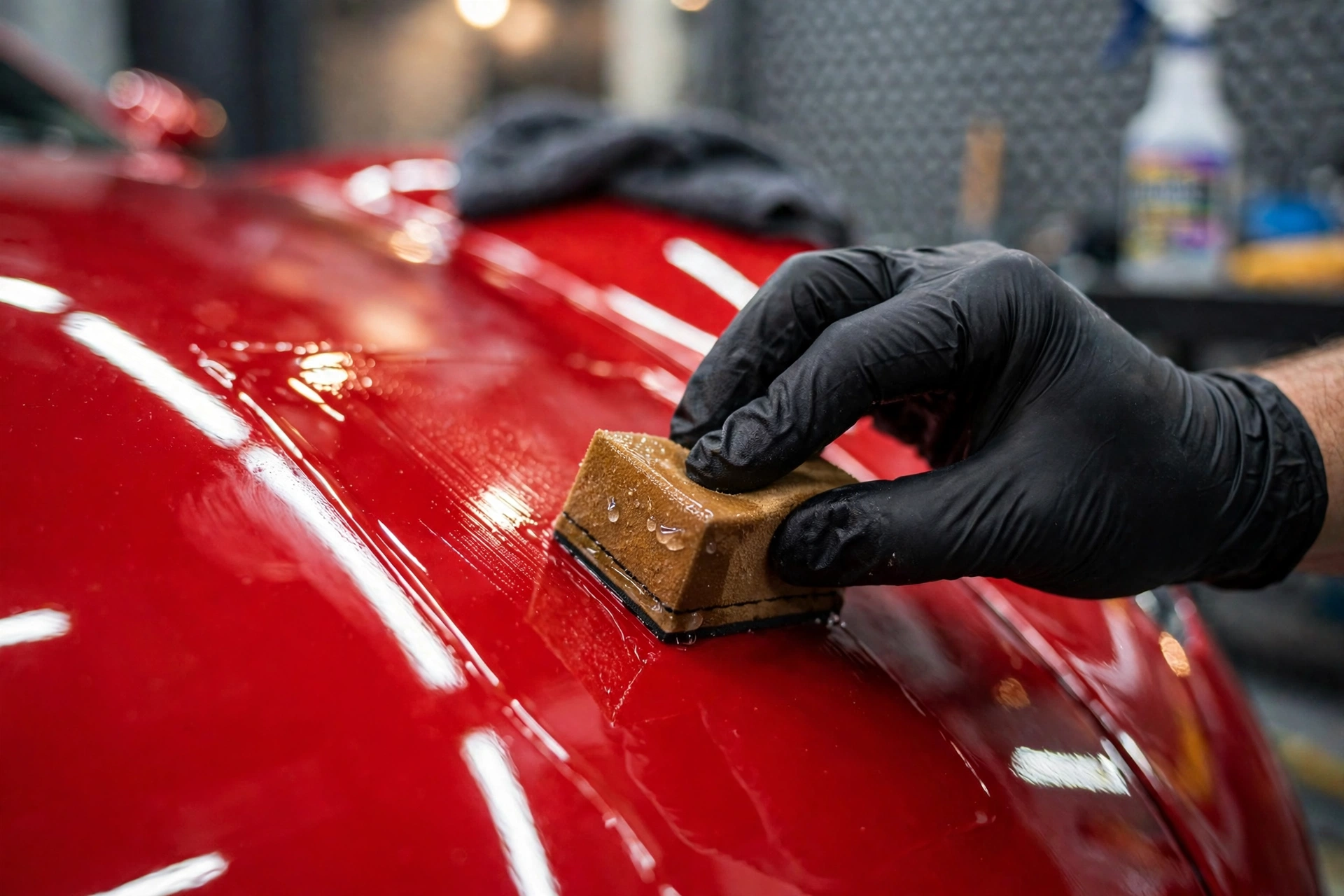
Ceramic coating is a liquid SiO2-based paint protection treatment that chemically bonds to your Ferrari’s clear coat. Once cured, it adds deep gloss, strong water-resistant coating behaviour and resistance to UV, road film and light chemical staining. For a Ferrari in Manchester, a professional ceramic coating keeps the paintwork looking its best with far easier maintenance.
Key facts
- What it is
- A liquid SiO2-based polymer that cures into a hardened layer chemically bonded to the clear coat.
- What it does
- Adds deep gloss, hydrophobic water behaviour and resistance to UV, road film and light chemical staining.
- What it cannot do
- It will not make paint scratch-proof or chip-proof — stone chips are a job for paint protection film.
- The golden rule
- Preparation decides everything: full decontamination and machine polishing must come before any coating.
Coating a car sounds simple until the car is a Ferrari. Maranello paintwork is laid thinner and softer than mass-market paint, the panels are sculpted into deep intakes and sharp creases, and every car carries carbon-fibre trim, exposed aero and intricate shut-lines that punish rushed work. A general car-care outfit with a spray bottle can do genuine, expensive harm here — which is why ceramic coating for a Ferrari in Manchester deserves a specialist who treats every panel as the six-figure asset it is.
Our Ferrari ceramic coating process starts where most details stop: a forensic inspection under specialist lighting, paint-depth readings across every panel, and a full decontamination before a drop of product is applied. Only then does the automotive ceramic coating go on — panel by panel, levelled and cured for a finish worthy of the prancing horse. Whether you run a daily-driven Roma or a garage-kept SF90 Stradale, request a free quote and we will match the protection to how you actually use the car.
Why a Ferrari Needs a Specialist, Not a General Detailer
Ferrari clear coats are typically thinner and softer than ordinary car paint, which means an aggressive compound or a heavy-handed polisher can strike through to base coat before the operator realises. Add Maranello’s love of sharp creases, deep side intakes and carbon-fibre components — each needing different products and techniques — and the margin for error shrinks to almost nothing on a Ferrari.
A Ferrari specialist works differently. Paint-depth gauge readings come before any machine touches the car; test spots confirm the least aggressive effective polishing combination; and every piece of exposed carbon, rubber seal and badge is masked. It is slower, more methodical work — and on paint this thin and this valuable, it is the only kind of work that should happen.
What a Ceramic Coating Does to Ferrari Paintwork
A ceramic coating is a liquid polymer — usually silicon dioxide, or SiO2 — that cures into a hardened, semi-permanent layer chemically bonded to your Ferrari’s clear coat. Once cured, it delivers the things owners notice every day: water that beads and sheets off the panels, a deeper and wetter-looking gloss, and meaningful resistance to UV fading, road film, bird lime and winter gritting residue. Applied as a ceramic coat on cars at Ferrari values, it belongs over fully machine-corrected paintwork — anything less locks defects in.
Just as important is what it cannot do. A ceramic coating will not make paint scratch-proof or chip-proof — a stone at motorway speed will still mark it, and that is what car paint film (PPF) is for. It does not remove swirls by itself; the paint must be machine-polished first. And while a professional ceramic coating makes every wash dramatically easier, it does not remove the need to wash the car.
- Intense hydrophobic behaviour — rain and rinse water sheet off, carrying loose dust away
- Deep, liquid gloss that flatters Rosso Corsa, Nero Daytona and triple-layer paints
- UV and chemical resistance against fading, bird lime, tree sap and road salt
- A slicker surface that needs less wash-time agitation — fewer new swirls
- Easier maintenance: dirt releases faster and drying takes minutes, not hours
- A harder, more chemical-resistant surface than any wax or ‘ceramic car’ spray sealant
Ceramic Coating Options: From Spray Coatings to Professional Systems
Search the market and you will find everything from best ceramic spray for cars contenders in a trigger bottle to multi-year professional systems that only trained installers can apply. Entry-level spray products suit garage-kept Ferraris that need a seasonal gloss boost; mid-tier professional coatings offer two to three years of genuine ceramic paint protection for regular drivers; flagship systems are the choice for daily-driven Ferraris facing Manchester weather all year.
The product is only half the equation — preparation is the other half. A flagship coating over uncorrected, contaminated paint is money wasted, because the defects are locked in underneath for years. Whatever tier of ceramic car paint protection you choose, insist on full decontamination and at least a single-stage machine polish first. When you request a free quote, we will recommend the tier that matches your mileage, storage and expectations — never more than you need.
You will also encounter big professional names — Gtechniq ceramic coating is one of the most searched in the UK — sold as installer-only systems with multi-year durability claims. Anyone searching for the best professional ceramic car coating the UK market offers should know: brand matters less than the installer. The same product applied over poor preparation will underperform, while a mid-tier coating over meticulous correction will look sensational. Judge the detailer, not just the bottle.
Ferrari Models We Coat
The 488 family wears deep side intakes and sharp aero surfacing that collect bonded contamination and trap polish residue. Its Rosso Corsa and triple-layer paints show swirls readily, so careful multi-stage decontamination and a measured machine polish come before any coating.
The F8 Tributo’s S-duct nose and sculpted rear deck create complex curves where machine polishers must be worked with restraint. Paint is thin here as elsewhere on Maranello cars, so paint-depth readings and test spots guide every correction before the ceramic layer goes on.
The Roma’s long, clean flanks and minimalist detailing look understated — which makes defects brutally visible under showroom lighting. A Roma responds beautifully to an enhancement polish and a professional coating, keeping those unbroken reflections mirror-sharp for years with proper maintenance.
As a plug-in hybrid, the 296 GTB adds charging-port surrounds and extra cooling apertures to the usual Ferrari surfacing. These details need careful masking, and the car’s daily-usable character makes a durable multi-year coating a sensible match for real-world mileage.
The SF90 Stradale’s extensive carbon aero — front splitter, side skirts, rear diffuser — benefits enormously from coating, since lacquered carbon stains easily. With shut-lines and active aero to work around, this flagship rewards the slowest, most methodical preparation available.
The Portofino’s folding hardtop introduces extra seals, roof channels and shut-lines that trap water and grime. A thorough decontamination of the roof mechanism area, plus coated paintwork that sheets water off, keeps this grand tourer looking sharp in all weathers.
Ceramic Coating vs Ceramic Wax, Polish and Spray Shines
The market is full of near-neighbours: ceramic car polish, car ceramic wax, ceramic auto wax, spray car shine products and so-called crystal coating car treatments. These are typically short-lived sealants — weeks or a few months — that sit on the paint rather than bonding to it. A true car paint ceramic coating is a different category: an SiO2-based ceramic paint coating that chemically bonds to the clear coat and is measured in years, not weeks.
Nothing wrong with a ceramic polish or ceramic auto polish as a maintenance top-up — many are excellent for that. But on a Ferrari, where the labour of proper preparation dwarfs the product cost, it makes little sense to invest days of machine polishing and then protect the result with a water resistant coating spray that washes off in a month. Auto coating protection at this level means a genuine bonded ceramic layer.
Ferrari models we coat
From twin-turbo V8 berlinettas to hybrid flagships, every modern Ferrari shares the same fundamentals — thin clear coat, complex surfacing and trim that demands careful masking. The process adapts to each model:
The 488's deeply sculpted side intakes and large flat panels show swirl marks readily under showroom light — a multi-stage machine polish before coating pays off visibly on Rosso Corsa and darker paints.
The F8's S-duct nose and louvred rear deck collect road film and brake dust in hard-to-reach crevices; thorough decontamination and a coating with strong chemical resistance keep those details crisp.
Roma's long, clean flanks and minimalist front end are all about reflection quality — paint correction focuses on levelling wash-induced marring so the coating delivers a true mirror finish.
The 296's compact proportions and flying-buttress rear mean complex curves around the engine cover; panel-by-panel coating application ensures even coverage on every concave surface.
As Ferrari's flagship hybrid, the SF90 deserves flagship protection — extensive carbon-fibre trim and aero elements benefit from coating formulated for both paint and composite surfaces.
Open-top driving exposes paintwork to more airborne contamination; the Portofino's folding hardtop shut-lines and boot lid reward careful masking and edge-to-edge coating coverage.
Our Ferrari ceramic coating process
Six stages, no shortcuts. Every Ferrari we coat goes through the same methodical sequence — the difference between a coating that lasts years and one that fails in months is almost always the preparation.
- 1
Consultation and inspection
We discuss how you use the car — daily driver, weekend toy or concours entrant — then inspect the paintwork under specialist lighting to map swirls, scratches, chips and old repair work.
- 2
Decontamination wash
A careful multi-stage wash strips the surface: citrus pre-wash, iron fallout remover, tar treatment and a clay treatment so the paint is surgically clean. Coating bonds to whatever is underneath, so this stage is non-negotiable.
- 3
Paint measurement and test spot
Paint-depth readings across every panel show how much clear coat can safely be worked. A test spot then confirms the least aggressive polishing combination that achieves the correction you want — no guesswork on thin Ferrari paint.
- 4
Machine polishing
Single or multi-stage machine polishing removes swirls, haze and light scratches, refining the paint to a defect-free, high-gloss finish. This is the stage that creates the deep reflections — the ceramic coating simply locks them in.
- 5
Panel wipe and coating application
Panels are wiped down to remove every trace of polishing oil, then the SiO2 coating is applied panel by panel, carefully levelled and left to bond — including door shuts, badges and coated trim where appropriate.
- 6
Curing and aftercare handover
The coating cures under controlled conditions before handover. You receive clear aftercare guidance — safe wash methods and products to use and avoid — so the protection performs for its full rated life.
Trusted further reading
- Autoglym — What is ceramic coating? — Manufacturer explainer
- RAC — Ceramic coating guide — Independent UK motoring advice
Related Ferrari protection guides
Serving Manchester & Greater Manchester
Manchester and the Cheshire supercar belt — Wilmslow, Alderley Edge, Hale and Bowdon — hold one of the UK’s densest Ferrari populations, and our roads are hard on them: M60 motorway film, winter gritting salt and Pennine rain that rarely stops. Ceramic coating for automobiles at this level is how local owners keep six-figure paintwork looking Maranello-fresh, from Spinningfields showrooms to Didsbury driveways, through every Manchester season.
Areas we serve
ManchesterSalfordStockportAltrinchamTraffordBuryOldhamWigan
Ferrari ceramic coating across Manchester & Greater Manchester — Manchester service area →
Frequently asked questions
What is the best ceramic coating for cars in the UK?
What is ‘G technique’ ceramic coating?
Can I use a ceramic coating kit on my Ferrari myself?
What does ‘coating for ceramic’ mean?
How long does ceramic coating last on a Ferrari?
Get your free, no-obligation quote
Tell us which Ferrari you drive and what it needs. We'll reply with an exact price and the earliest available slot.